Tips if your dog is a bit too over – enthusiastic on walks
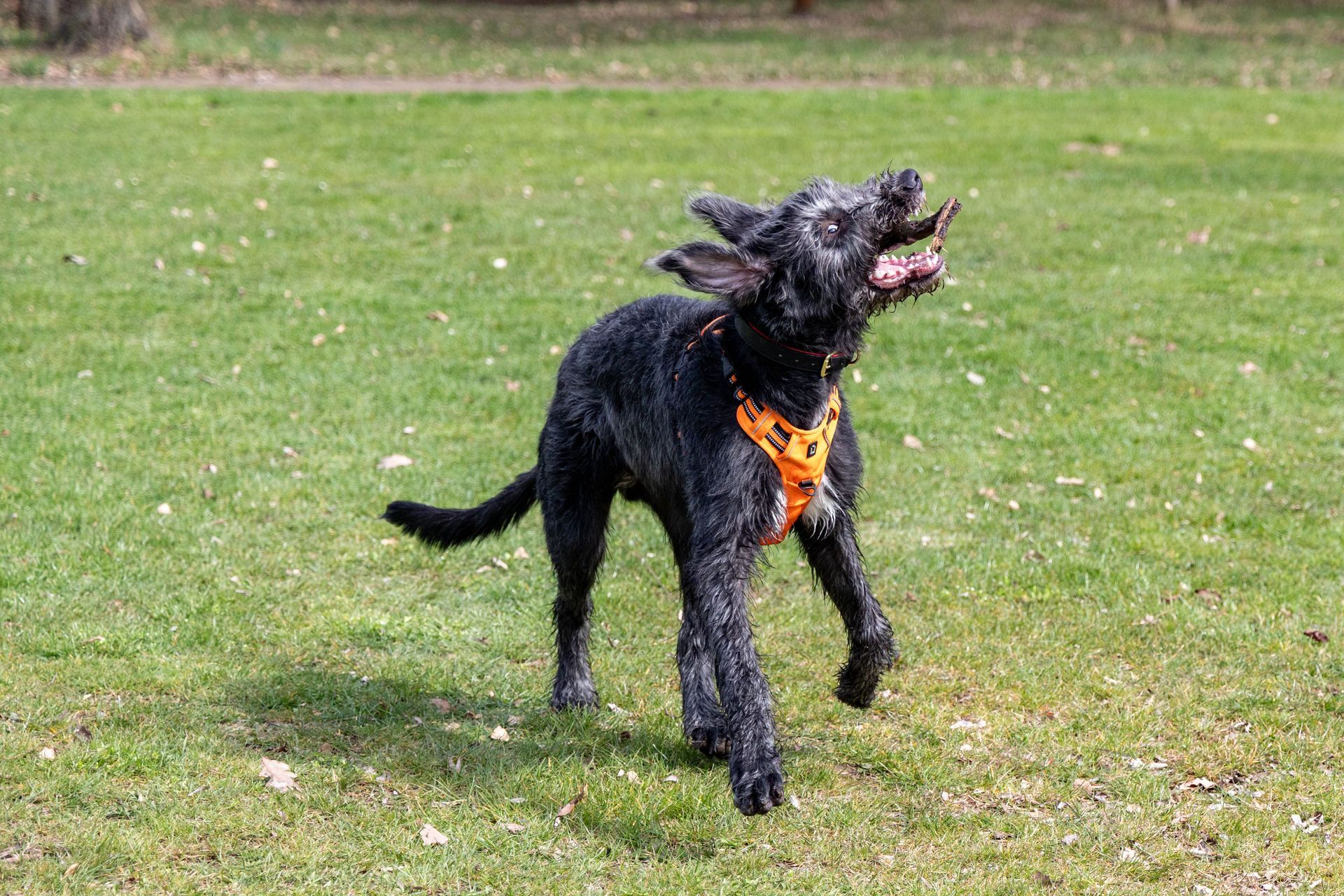
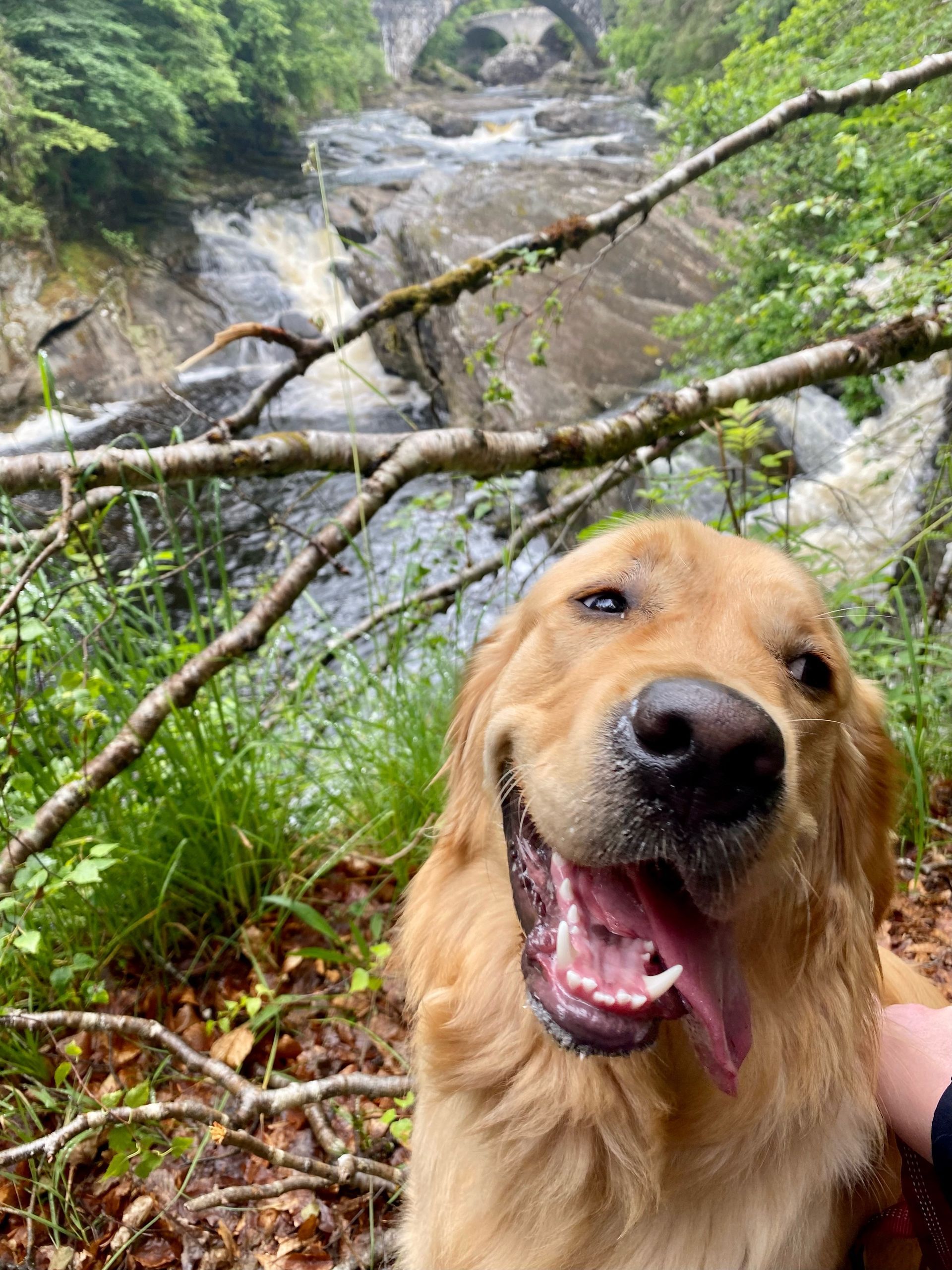
Of course you love seeing your dog’s tongue lolling out happily and enthusiastically on a walk and take great joy in seeing them whizzing around and having fun. However, sometimes a dog’s enthusiasm levels sky rocket and if they can’t slow down they can sometimes knock into you or other passers by just by running towards you, or jumping up. This can lead to pain and injuries – something that we all want to avoid.
Why think about this, is there anything I can do?
There are several reasons a dog may be showing ‘wired’ or ‘hyped’ up behaviour on a walk. Here are some considerations
1.Exercise needs. Are they getting adequate exercise for their needs? Some dogs will need more exercise than others. Has anything changed at all? For example, have they been in a crate for a long period due to an injury and now being reintroduced to walks? If so, they may have a lot of pent up energy.
2.Are they practicing this behaviour with others? Are they in an environment where they are running around consistently all day? For some dogs when they have this level of activity on a regular basis this spills over to behaviour on a walk.
3. Is the walking environment enriching enough? Do they have enticing things to smell and can they potter around or is it an area that is full of other dogs where they just run around constantly? If a dog is running around consistently this can make it harder for them to listen as they’re over stimulated. If you imagine a sink (to borrow an analogy from the wonderful Sarah Heath), and that sink is being filled with water, and the water represents over stimulation which can include barking at the doorbell, running constantly on walks, repetitive ball chucking can all result in sensory overload. Imagine a child going to one birthday party where there is a bouncy castle then on to another where there’s another bouncy castle and sweets.
How to spot signs that your dogs sink is filling up
Body language signs of an overstimulated dog can include dilated pupils, hackles raised, lip licking, poor impulse control, barking, panting. Spotting these signs can help you take steps to lowering your dogs arousal levels back to baseline.
Think A, B, C. Think antecedent, behaviour, consequence – what environment does the behaviour happen in, who/what is around, what behaviour can you actually see (try to avoid labels like stubborn as they don’t actually tell you much about the behaviour that’s being displayed, is there any noise, is the environment very fast paced?
What you can try
Free work is a low impact activity that all animals can try. As well as being an activity that can be calming,it can help you spot areas that your dog may avoid (it could be painful underfoot, or it may remind them of an area that something scary happened).
Using an activity budget – looking at the amount of exercise, sleep and enrichment can help you spot any areas that may be missing/need tweaking.
Would you like support?
Questions are what I work on in my Polite Pup Club membership. Every 2 weeks I answer questions about different topics.
There are resources on recall, polite walking and loads more.
We have videos and you can meet other members too.
If you’d like to find out more check out the Polite Pup Club.