Children and Dogs
I know of many family members who have small children and dog and they live in harmony.
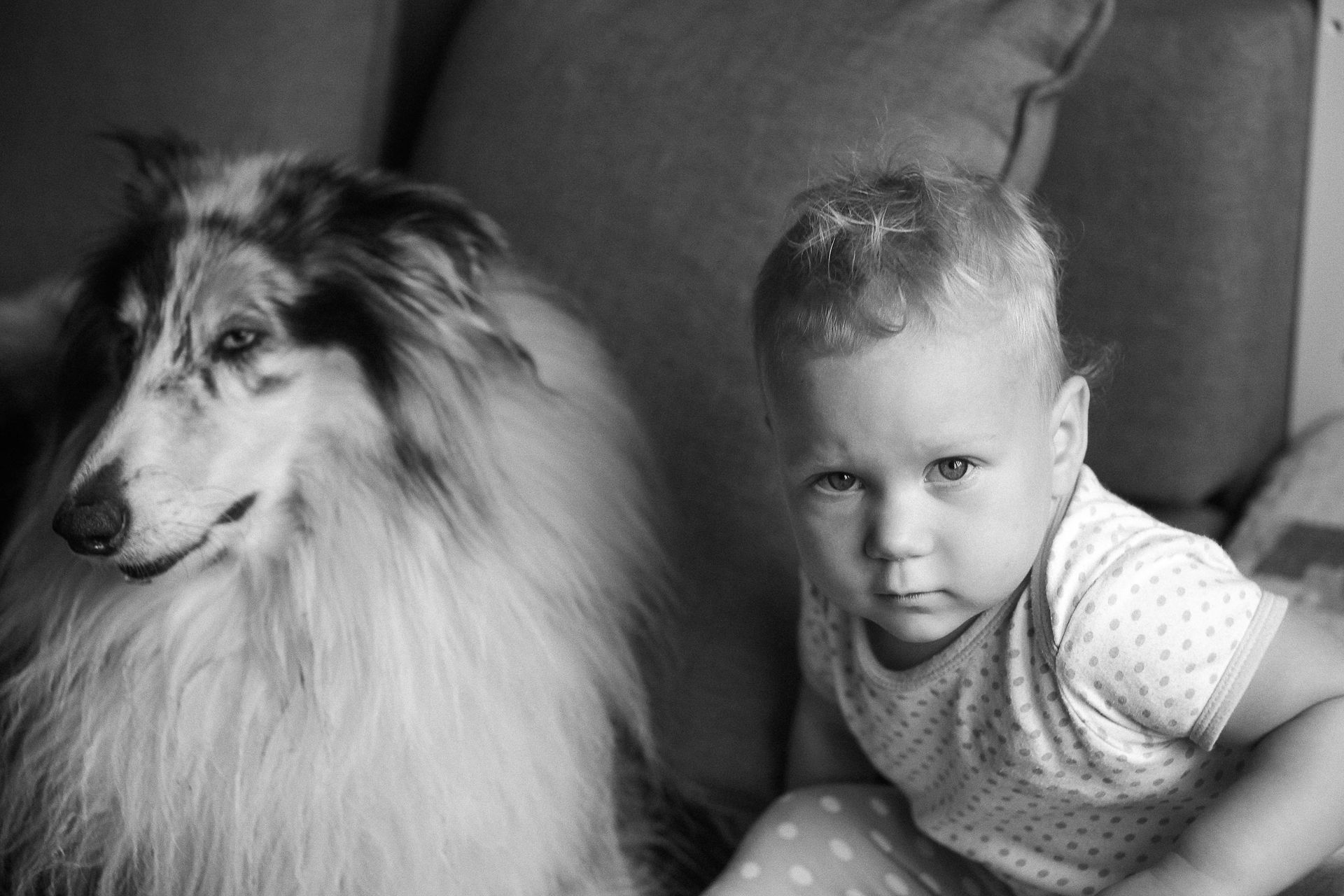
However, all dogs have the potential to show reactivity/aggression. Even if a dog is tolerating an experience (not snapping/biting) it does not mean that they are enjoying it.
Take the picture above: The dogs face are right near the childs. The fluff on their face is likely to make it difficult to read any tension in the face, and you can't see the whites of the dog on the left eyes. Both dogs mouths are shut which can be a sign they don't feel safe. Personal space is important for dogs. Just as we don't want to be squished in a tube carriage they don't want to experience space invaders! Dogs are tolerant but just like us stress can build up. Pain, loud noise, experiences that have happened one too many times can all build up and result in reactive or aggressive displays.
Here are some top tips:
- Ask your child to redirect their love and enthusiasm onto a toy dog
- Encourage them to show love to their dog by filling up their water bowl instead
- Invest in baby gates so your dog can be in a separate room when you can not actively supervise them
- Don't allow a child to climb on a dog
Watch out for body language
Can you see
- relaxed wiggly body language?
- Is the mouth open and relaxed?
- Is the dog actively looking for attention?
These are all good signs.
If the dog is
- Moving away
- Barking
- Growling
They are all ways of saying they would like some space. It's imperative we respect this.
If your child is having friends over it's important that they know the rules and boundaries for interacting with your dog too.
Adapted from How to have kids and dogs without loosing your mind, Colleen Pellar.
If you'd like to book a talk for your child's school - reach out.