Enrichment
Whether you're a seasoned dog owner or you've only just picked up your puppy, learning about enrichment could be the best thing you do.
Whether you're a seasoned dog owner or you've only just picked up your puppy, learning about enrichment could be the best thing you do.
In this blog post I will break down the different types of enrichment, why they are important and some activities to try at home yourself! I've been utilising enrichment since our Cocker Spaniel Marty first came home. My love of enrichment has grown and my knowledge on the benefits of it have also flourished. As a spaniel owner with a chronic illness I often get asked how I cope with the crazy energy that this breed commonly has, my answer is always the same....ENRICHMENT.
What Is Enrichment?
Put simply enrichment is anything that engages your dog. The human equivalent may be reading a book or gardening as an example. Similar to human hobbies, enrichment for dogs comes in many shapes and sizes. Whilst most people believe enrichment is purely interactive toys filled with high calorie treats, that statement could not be further from the truth.
I like to break enrichment down into 5 categories -
*Visual/Hearing
*Taste
*Touch
*Smell
*Brain
Benefits
Using those categories you can implement regular and varied enrichment that provides many benefits to your dog. Below I have listed my top 5 that I have noticed since including enrichment in our daily lives -
* Reduces stress
*Provides a distraction from disruptive ways
*Support crate training
*Tires out your dog and promotes calmness
*Provides mental and physical stimulation
Let's get to the practical!
When you are first starting out with enrichment it's important to try out a range of activities, this means you can truly find what your dog loves. For example, our spaniel loves scent work, so I incorporate this in to a lot of activities. Below are some suggestions that you can try which cover the 5 senses we spoke about earlier!
Visual/Hearing -
Dog Tv - On YouTube search Dog Tv and pop it on for your dog to watch. Perfect if you need some time to work and don't have lots of time to interact.
Watching the outside world - Have you ever noticed your dog trying to look out of the window? Maybe climbing on the sofa or trying to tiptoe to reach to view out? Try giving them a space where they can easily see out. Maybe bird feeders to encourage wildlife (At a height to ensure you aren't putting them at risk).
Radio - If there are loud noises outside and your dog is being reactive. Try blocking some of it out with the radio. Classical music has been proven to calm our canine friends down.
A 2002 study conducted by animal behaviourist Dr. Deborah Wells confirmed the relaxing effect on dogs of classical music. In this study, the dogs spent more time resting and being quiet, and less time standing when exposed to classical music compared to heavy metal music, pop music, or conversation.
Taste
This is probably the most common type of enrichment that people know about. Think KONG®, West Paw®, SodaPup® etc.
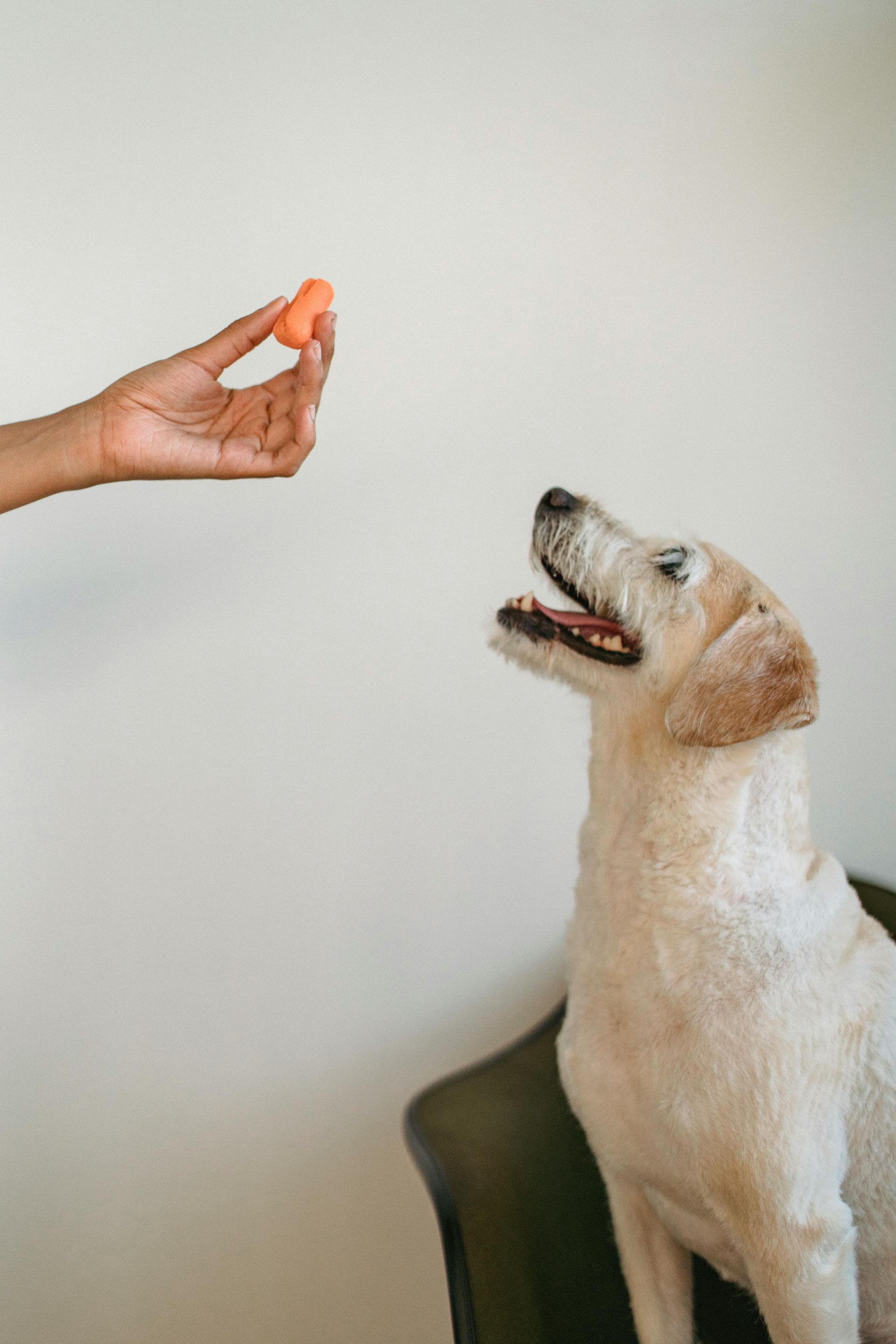
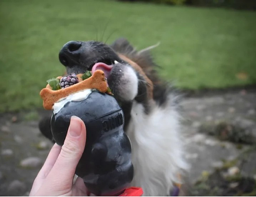
Use a Stuffable toy and pop your dogs daily food allowance in it. For an extra challenge you can freeze it. For extra interest pop a tasty topper on it! Think dog treats, dog safe peanut butter, dog safe baby food etc.
We stock a range of toys on our website and often suggest recipes on our social media channels!
Touch
This one can often be confused with Taste, but there is one main difference. Touch is all about the sensation. Some of my favourite activities are:
Lick Mats - These textured mats or bowls are perfect for feeding your dogs meal or as a treat.
Varied Eating Station - Where does your dog have their dinner? Always on the same hard flooring in the kitchen? Why not mix it up and feed them outside on the grass?
Walking - Varying your dogs walks can provide huge benefits. How many different terrains can you think of? Beach, Fields, Pavement etc.
Scent
"A dog's sense of smell is estimated to be 10,000 to 100,000 times better than that of a human."
Scent is the most powerful sense for our canine friends. Therefore it has a big impact on the enrichment in our dogs lives. Some activities to try are:
Sniffari walks - allow your dog to sniff and explore their surroundings whilst on a walk. Let them lead the walk.
Chief post checker - an easy activity is to allow your pup to sniff any parcels or letters that you receive.
Snuffle Mats - These are a great tool that you can hide treats in and allow your dog to sniff them out.
Natures snuffle Mat - Scatter some treats outside in grass and get your dog to search for them.
Brain
This category is covered with a lot of the above activities, however there is something to be said for training and bond building activities. Some suggestions may be teaching your dog a new trick, or using the time it takes for the kettle to boil to practice a dance routine with your dog. Another example is puzzle toys, be sure to cycle your toys so that your dog doesn't get too used to one activity.
Summary
So there you have it! the above activities are just the start. There so many different types of enrichment that can help you and your dog lead a happier more fulfilled life. You can find out more on our website and social media channels below!
@pawsinearnest
www.pawsinearnest.co.uk
Melissa Smith