Children and dogs - harmony at home
Children and Dogs: A Guide to Safe and Happy Relationships
Having a dog in your family is exciting and fun, but it’s important to teach children how to interact safely and kindly with their furry friend. Puppies and young dogs are still learning, and we need to help them grow into happy, well-behaved companions.
Language you can use
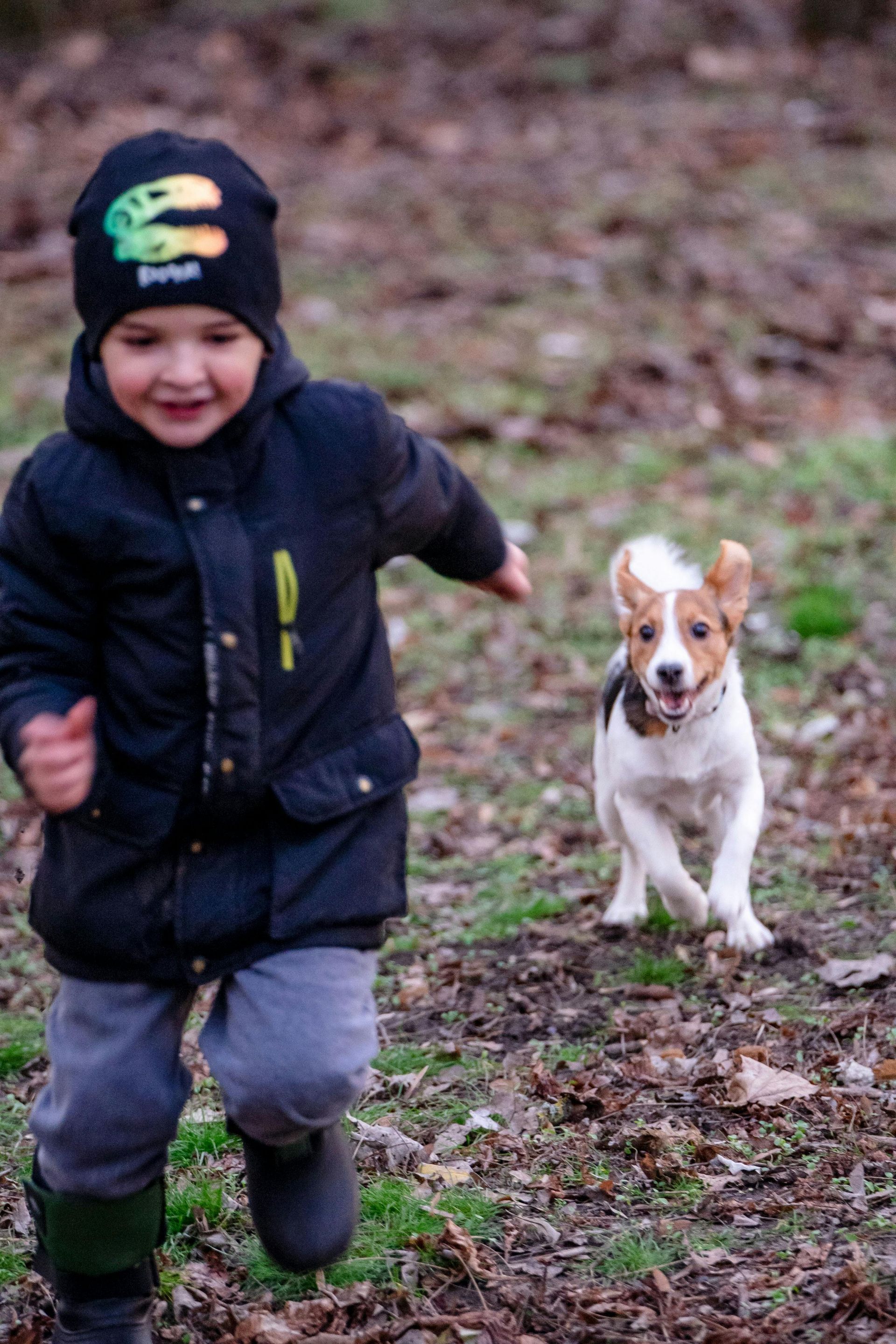
Explain to your children that their dog is very young and is still learning and we need to help them. You could call the dog their baby sister/brother. Explain that a dog cannot speak to us and tell us if they’re upset but we can look at their bodies to see if they are worried. We can be ‘doggie detectives’ and look for signs that our dog is worried.
In the same way as we would not like someone running up to us and snatching our favourite chocolate off us, we should not disturb our dog when they are eating their food or enjoying a tasty chew.
Also, if we are in bed, nice and snug and cosy and warm and dreaming, we would be very upset if someone came to us and took the covers off us and started shouting or making lots of noise. We should think about how our dog feels and instead use our indoor voices when our dog is sleeping and relaxing.
A Chart
Have a chart on the wall that provides boundaries and reasons why they should behave in a certain way around their dog.
Why?
- Puppies have a lot of energy and that energy can sometimes come out in nipping behaviour.
- Dogs have sharp teeth and they can cut a child’s thin skin.
A Safe Space
Having a safe space a puppy can retreat to and relax is important. They should be allowed to go here and have a Do Not Disturb sign on the door so everyone knows that this should be a place their dog goes to relax and be calm.
Specific Training
No jumping up training can be helpful in avoiding jumping up behaviours.
Why do dogs jump up?
Lots of dogs jump up at people as it’s exciting for them to do so. Often it is inadvertently reinforced as we give eye contact, verbal reinforcement, or physical reinforcement.
It’s not ideal to push a dog off as this can be reinforcing for them; when you see dogs during playtime they spar with each other and push each other up and down—it can be a game. This is a similar concept to us pushing them off.
What to do?
- Instead of: pushing off, speaking, giving eye contact
- Try: Crossing your arms and looking away. If you need to remove him, do so without eye contact or telling him off.
Management
Management is imperative when we are training a new behaviour. It’s important our dogs aren’t allowed to practice something over and over again as this makes the new trained behaviour harder to integrate.
You could try:
- Popping a toy in a box outside your front door and throwing it as you enter so Dice searches for that rather than jumping up.
- Throwing down treats as you enter and when Dice’s nose is on the floor, pair it with a cue word such as “find it” to get his nose on the floor.
Things to be mindful of: The Extinction Burst
This is when a dog will try and repeat the original behaviour (in your case jumping up) over and over again at an intensity that is quite high. This is because this is something they have been used to doing and are still clinging to it even while they are learning new rules. But persevere! He will learn with consistency. I’m here to support you if you have any questions.
Reinforcement (How Many Treats and How Often)
If you’re concerned about weight gain you can use your dog’s kibble as training, but bear in mind in very exciting situations it may not be high enough in value.
Be a Tree / Be a Statue
Teach your children to cross their arms – their branches – or stay still like a statue.
Temperament
A dog’s temperament can be affected by early life experiences and genes. This is a different concept to training—you cannot train temperament.
All dogs will have different temperaments and they can depend on different factors including:
- The mother and father (dam and sire’s) temperament
- If the mother was stressed during pregnancy
- Early life experiences (or lack of experiences) from a young age
Just because a dog is a certain breed it does not mean that all dogs of that breed will have the same temperament.
Quick Tips
- Utilise the lead so your dog cannot practice the behaviour of jumping up.
- Reward them for not jumping.
- Ask your children to ask them for a sit instead.
Hugging
Children can show their dog they love them in lots of different ways such as:
- Playing with them
- Taking them for a walk
- Filling up their water bowls
- Reading a story to them on the sofa
- Being kind and considerate and not shouting or pulling their tail or fur
Hugging can feel very stressful to a dog. During dog fights, dogs place their necks on each other so in theory this can feel similar to them when we hug them. When we hug a dog tightly it can feel trapped and may bite. For some dogs, they will tolerate gentle hugging, but it will depend on their previous experiences of it.
Games to Avoid
Rough and tumble games can hype dogs up and result in nippy behaviour. They should be avoided.
Toys to Invest In
Long dangly toys and flirt poles can be great toys that you can redirect nipping behaviour onto. Also, because they are dangly it makes it less likely that a dog will accidentally nip a child’s finger during play.
Meeting Other People’s Dogs
As well as asking for consent from the owner, it is important to ask for consent from the dog.
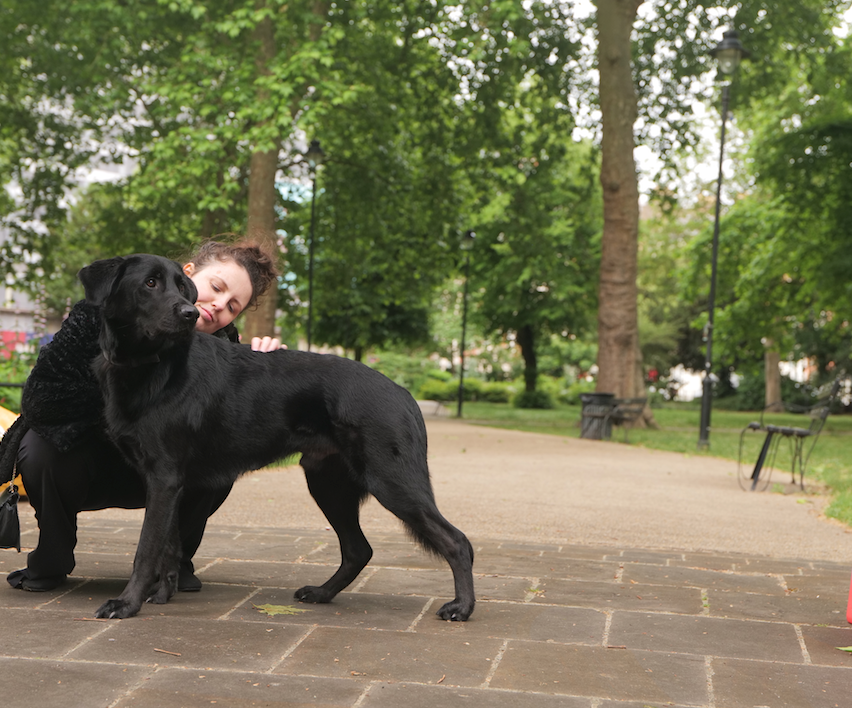
Here is Percy. Children can do this by patting their legs and seeing if Percy approaches them. If Percy wants to come and say hello, they can do 3 gentle strokes on Percy’s shoulder (not leaning over him – that can be scary) and then take their hand away.
- If Percy stays, he may want more petting.
- If he totters off, that’s a sign he’s had enough. Children can then wave bye-bye to Percy and wish him a good day.
Rest and Relaxation
Dogs need to sleep and relax for their wellbeing. Sleep helps a dog to de-stress and learn new memories. Having a space to get away from it all (even for a dog who adores playing) is important.
Sometimes a dog can get overtired (like children!) and this can result in hyper behaviour.
Using the ABC Technique
Use this technique to determine when a dog may behave in a certain way:
- A – Antecedents: Where is the dog? What is happening? Who else is there?
- B – Behaviour: What behaviour can you actually see? What does it look like? What is the dog physically doing?
- C – Consequence: Does the dog get eye contact and physical touch or are they spoken to after this behaviour happens?
Once you recognise the A, you can spot triggers that the behaviour is about to happen and you can help to change the environment/train the dog to do something else—or a mix of the two.
Having Friends Around
If your dog has an injury it is important that everybody is aware of this, including visitors. Having baby gates can be a great way of managing your dog and getting them away from situations that are too much.
Explaining the be a tree / be a statue rule is a good idea too.
I offer free talks in schools.