Grooming : your questions answered
We caught up with Lu Wardle from Lu's grooms to answer your grooming questions
-How often should I get my dog groomed?
Complicated answer, depends on your dog and their breed. A simplified answer, if you have any flavour of doodle you should expect to be having them groomed every 6-9 weeks depending on how thick and or curly their fur is. If you have a double coated dog like labs or goldens a few times a year would be a minimum, when they have a big shed and are dropping fur like crazy or have those funny fuzzy trousers they should definitely be groomed as we can do a deshed on them which will get the worst of their loose fur out, it's also good for their skin to be washed at least every few months especially if they suffer with dry skin. However, it is personal preference, if your dog is always shedding a lot then regular grooming can really help reduce that or if you don't like when they start to smell of 'dog' you can put them on a regular schedule, unless they are being bathed more than once a week then there's no such thing as too often.
For working line spaniels and similar I suggest when they start to get what I call 'Grinch feet' the extra fluffy toes is normally a good indicator for it being time for a tidy up of their feathers and feet, it also tends to stop the horrible knots that can form behind those big gorgeous ears.
How soon should I get my puppy groomed?
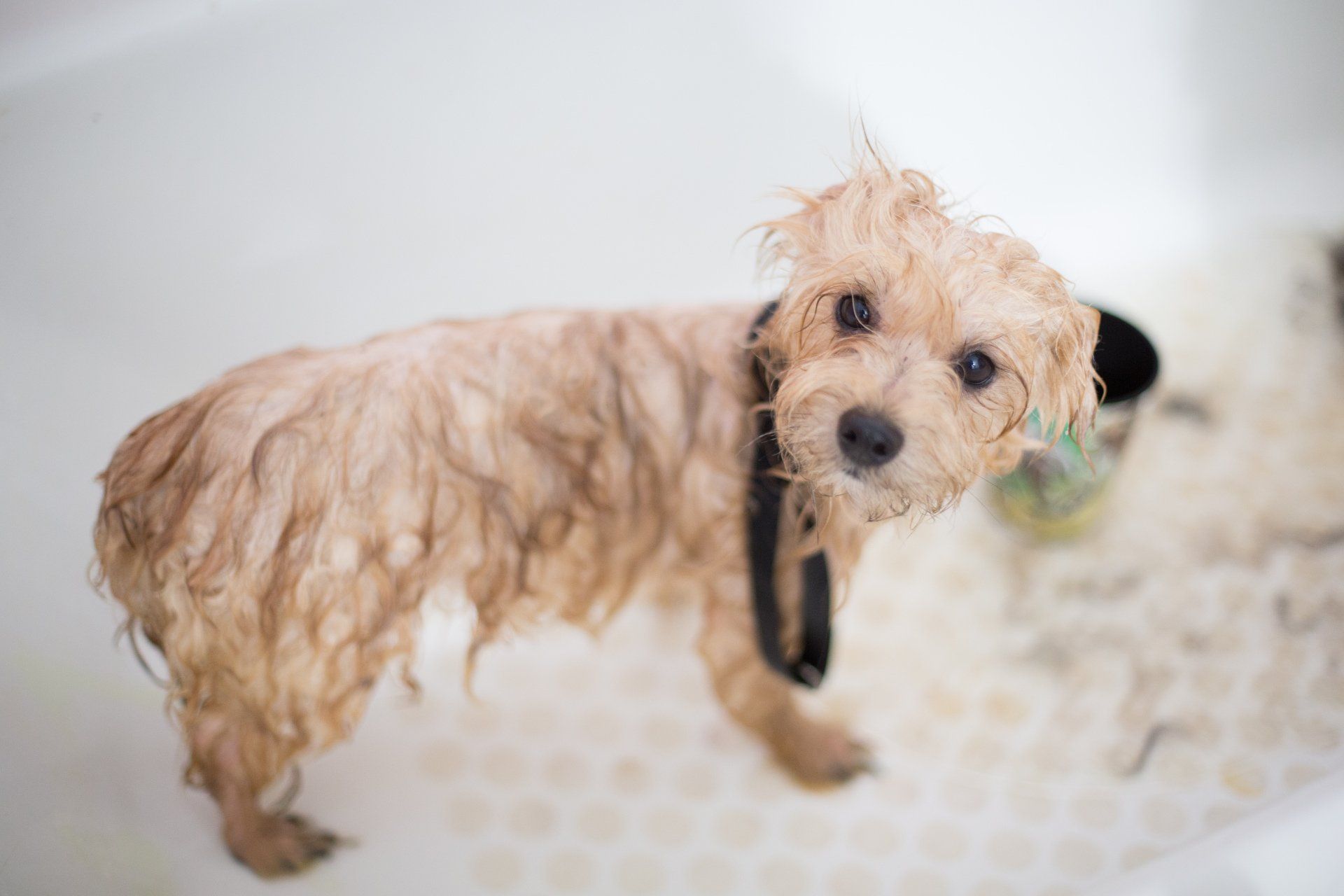
As soon as they are fully jabbed, most groomers will offer something typically referred to as a 'puppy groom/intro'. This will be a wash, dry and introduction to things like the noise of the clippers and holding still around scissors, most places often offer additional things like ear cleans and nail trims.
Even for your lower maintenance breeds you should still get them in for a few puppy intros as it sets them up for success with being comfortable and confident with being groomed throughout their life.
For your higher maintenance dogs like your doodles or anything being done to breed standard the sooner you get them in the better as they will typically being seeing your groomer at least every other month for the rest of their lives, if we can build a great relationship then it makes their grooming experience so much better.
What can I be doing at home to help?
Brushing! For all doodle owners you should have at least a slicker brush and a comb, your slicker brush is gentler. It won't pull on any little snags and is great for use all over the body which should be done at least a few times a week, once you've brushed all over with the slicker then go over with the comb, as the slicker doesn't pull so hard it means with knots sometimes it will skim straight over the top of them. If you want any recommendations on brushes just ask your groomer, they will be able to give you the best advice as they work with your dog's fur and can tailor it to their needs. If you have questions on brushing technique, again you can always ask your groomer, we want your dog looking and feeling their best so we are happy to help.
Touch them, everywhere. Hold their feet, poke between their toes, touch their nails, look in their ears and lift their tails. Your groomer and your vet will love you for this, it's also good for in the future being able to check them over like in the summer for grass seeds between their toes.
Desensitise them, have them in the room with you while you dry your hair so it's not so shocking for them when we dry them, get them used to water too, even just a rinse off of their feet after walks will show them that water isn't scary, if they roll in something foul smelling remember to make it as calm and comfortable of an experience as possible, warm water, cooler than you would shower in as they can't sweat they can overheat in too hot a temperature. often a good way at home is if you have a few inches of water in the sink or bath already, if you're using a shower head it's probably best when they're young to fill up a jug and use that instead as the high water pressure can be overwhelming.
If their nails grow really quickly you can also ask your groomer to show you how to trim their nails if they are getting long in between grooms.
What does a 'puppy intro' involve?
All groomers are different but what my puppy intros involve is a wash, dry, introduction to the clippers, introduction to scissors so if they have a fringe I will often trim that back a bit and a nail trim. With the intro to the clippers this is where I'll turn them on with no blade so they hear the noise and touch their body with them so they feel the vibrations. So much of a puppy intro will be entirely new experiences for them, my puppy intros quite often take just as long as a full groom because we stop for cuddles and encouragement and each new aspect is slowly introduced to them. Your groomer will probably suggest a few of these before a full groom and I typically say the first few should be no longer than 6 weeks apart but ideally 4 weeks as they can forget the routine so you have to introduce them to grooming all over again.
If you have any other questions feel free to reach out to Lu's Grooms on 07530179373