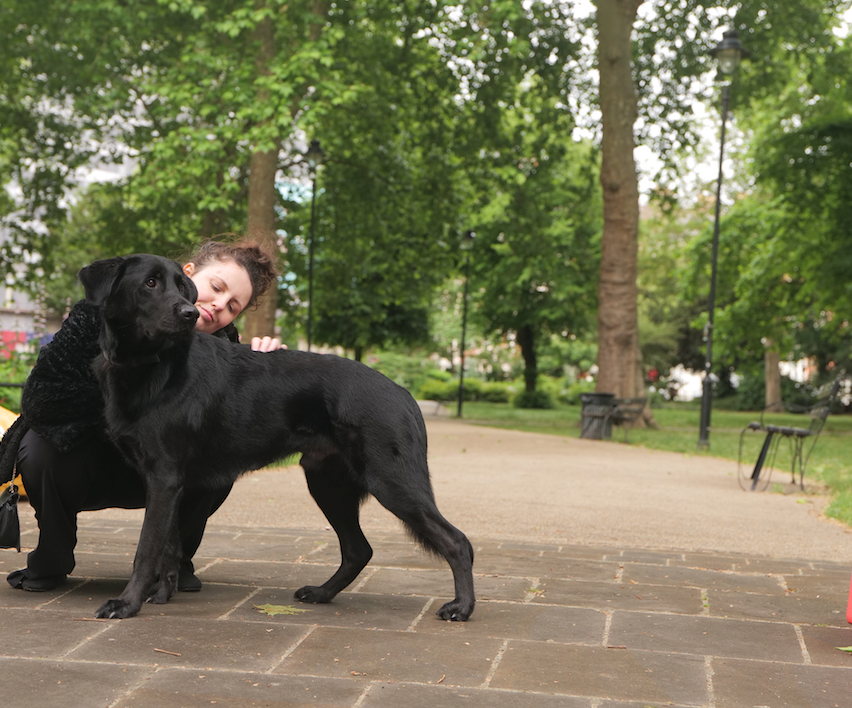
Does the age you come to a training class matter – should you come to puppy class?

13 January 2025

I read a paper recently called An Investigation into the Impact of Pre-Adolescent Training on Canine Behavior by Dinwoodie and colleagues. The aim of the study was conducted to see whether training done prior to 3 months of age was more effective than doing training later. Here is what they found.


I read a paper recently called An Investigation into the Impact of Pre-Adolescent Training on Canine Behavior by Dinwoodie and colleagues. The aim of the study was conducted to see whether training done prior to 3 months of age was more effective than doing training later. Here is what they found.


How was the study completed?

The study was completed online via a questionnaire. 641 dog owners took part with 1023 dogs in total. The age of the dog, neuters status, sex and methods used in class were researched as well as topics such as overactivity, reactivity and house soiling. 48 % of the dogs had attended a training class, while 51% had not attended class. The 51% were the control group.


What were some of the findings of this study?

The study found that aggression, compulsive behaviour and excessive barking reduced in puppies that attended class who were less than 6 months old compared to dogs who had not attended.

Training methods

They studied dogs who had been trained using reward based methods vs punitive based methods (slip leads, martingale and shock collars). They found that dogs who were trained with positive reinforcement had less aggressive behaviour.


You can read the study here.


References


Dinwoodie, I.R.; Zottola, V.; Dodman, N.H. An Investigation into the Impact of Pre-Adolescent Training on Canine Behavior. Animals 2021, 11, 1298. https://doi.org/10.3390/ani11051298
by Lisa Sinnott 30 January 2026
Some dogs do it for hormonal reasons others due to behavioural. Reasons behind humping can include hormones, anxiety, tension attention seeking, frustration, eliciting play or displacement behaviour when stressed. Filling out the diary can help pinpoint more triggers and look at what is happening.
by Lisa Sinnott 30 January 2026
Children and Dogs: A Guide to Safe and Happy Relationships Having a dog in your family is exciting and fun, but it’s important to teach children how to interact safely and kindly with their furry friend. Puppies and young dogs are still learning, and we need to help them grow into happy, well-behaved companions.
by Lisa Sinnott 30 January 2026
You may have heard that you have made a 'rod for your own back' with your dog, or 'spoiling' them has caused separation anxiety. I am here to tell you, that this is not the case. Dogs from breeders and rescued dogs can experience it. Separation distress can be caused for lots of different reasons. These can include:
by Lisa Sinnott 30 January 2026
Understanding Pica in Dogs: Why They Eat Non-Food Items
by Lisa Sinnott 29 January 2026
Sound sensitivities can be distressing for us to watch.
by Lisa Sinnott 27 January 2026
Many trees can be dangerous if a dog eats them which many dogs can do.
by Lisa Sinnott 19 January 2026
Sometimes management at home can be tricky if you have more than one dog, with this in mind I wanted to break down some options for you.
by Lisa Sinnott 12 January 2026
It is thought that in chronic stress that the part of the brain responsible for learning and memory – the hippocampus – has shrunk.
by Lisa Sinnott 7 January 2026
Introducing dogs to one another
by Lisa Sinnott 15 December 2025
Not all muzzles are made the same. Fabric one’s can inhibit panting, and can easily be torn on branches and some hold a dog’s mouth shut – uncomfortable and mean they cannot pant.